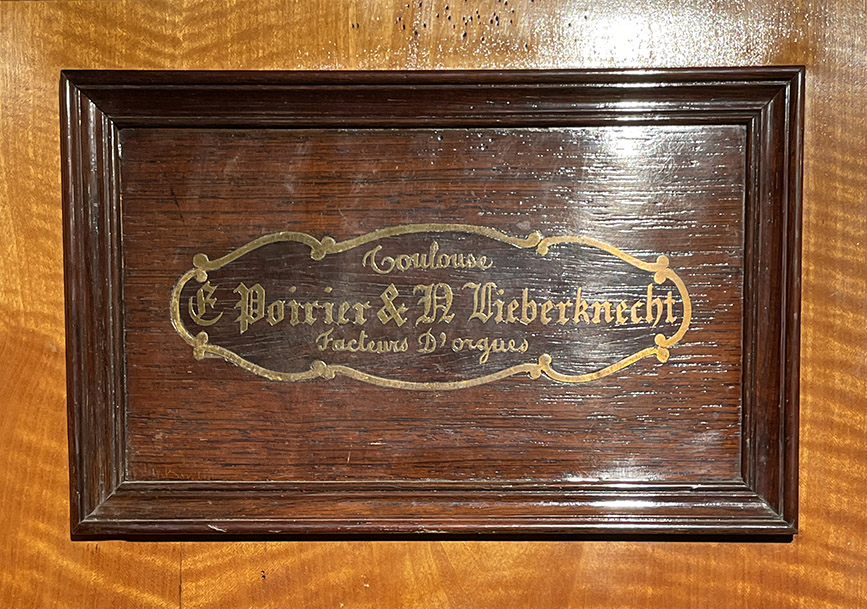
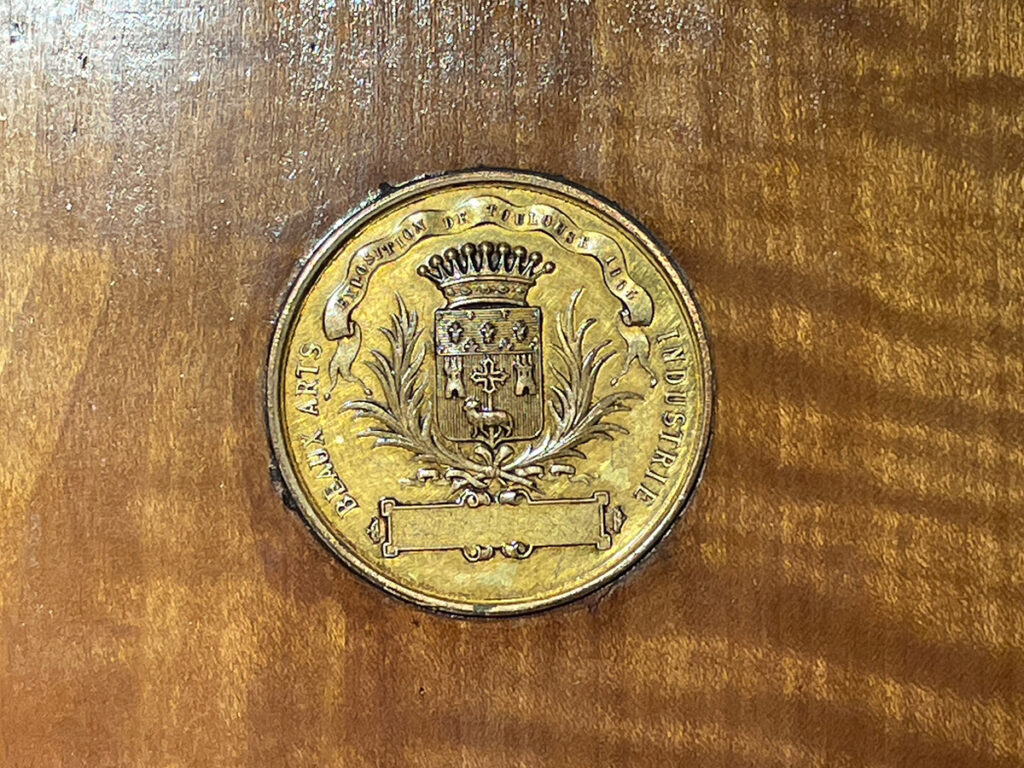
Poirier-Lieberknecht | 1864
Overview
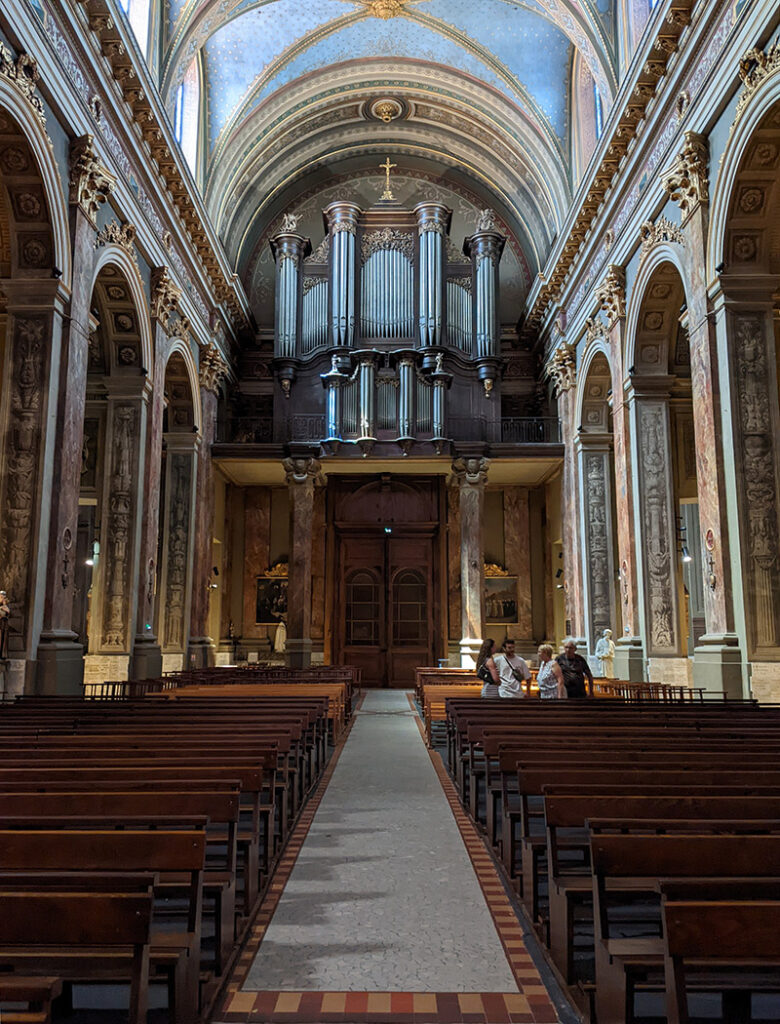
Today, this organ is regarded as one of the finest surviving examples of the so-called transitional French organ-building style. It combines stops inherited from the great French classical tradition of the eighteenth century, such as the Grand Plein Jeu, the Grand Chorus of Reeds, and Cornets (the Great Organ Cornet retaining its open 8′ rank), with features already characteristic of the Romantic organ: gambes, salicionals, and harmonic flutes.
Particular features include an enclosed Récit division, while the two principal manuals still retain the traditional divided registers (Bass/Treble). The instrument also preserves several stops typical of this period, notably the Euphone and English Horn, both employing free reeds.
The organ’s instrumental part has been listed as a Historic Monument since 20 February 1979.
History
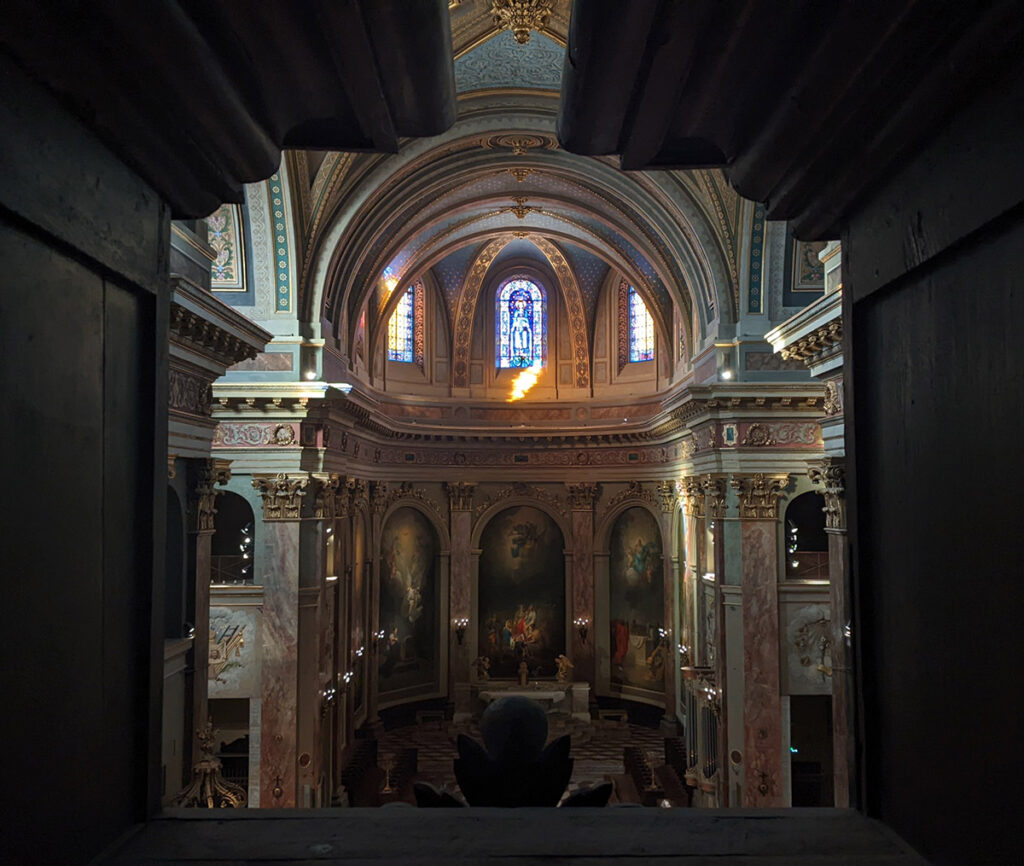
In 1775, the monks sold the organ of the former church, which was subsequently demolished. When reconstruction resumed after the French Revolution, the parish council sought to provide an instrument worthy of the magnificent new building then under construction and being decorated at the same time (1810-1825) with the celebrated paintings of Joseph Roques.
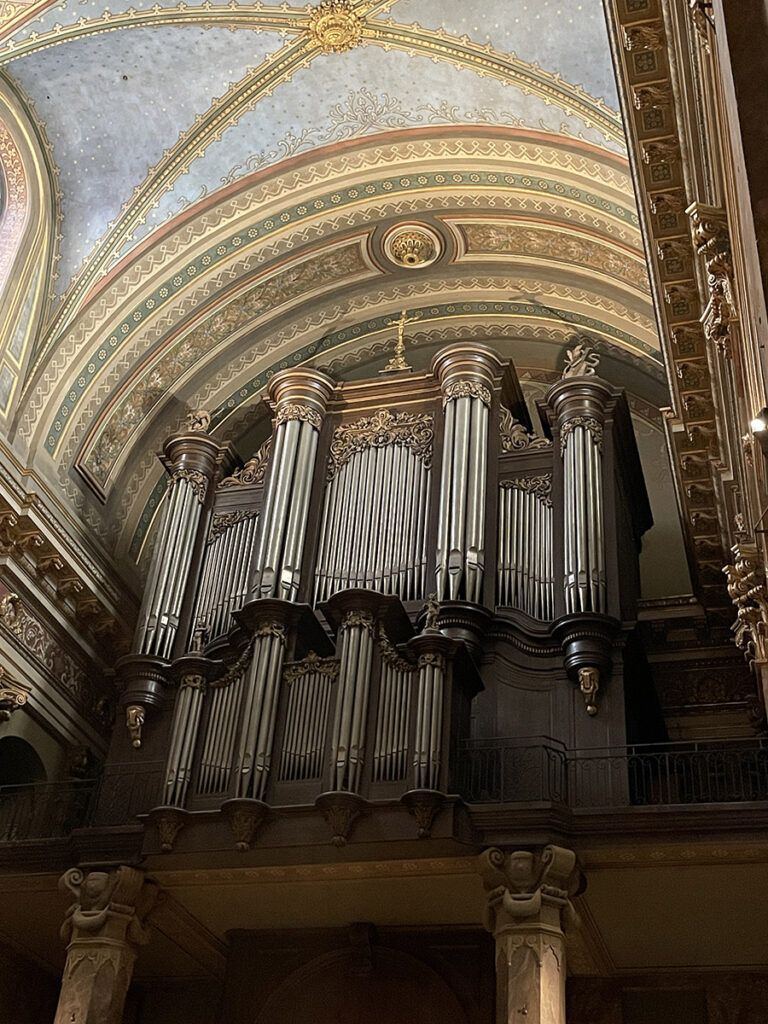
Components from several eighteenth-century organs, originating from Garaison and Longages, were acquired and installed in a new case. By the middle of the nineteenth century, however, at a time when many new organs were being built throughout France, the instrument no longer met the expectations of contemporary organists.
As early as 1845, Aristide Cavaillé-Coll had submitted a proposal to the parish. It was not until 1861, however, that the church council accepted the project put forward by his rivals, Émile Poirier and Nicolas Lieberknecht, who were then established in Toulouse.
The design of the case was entrusted to the architect Villeneuve, who enlarged the existing structure while reusing parts of the earlier case, just as Poirier and Lieberknecht reused a number of pipes from the previous instrument.
The completed organ was inaugurated on 3 January 1864, with Louis-James Lefébure-Wély performing one of his own compositions.
In the booklet published in 1992 following the restoration of the organ, the distinguished organ specialist Philippe Bachet described it as a: “masterpiece… whose remarkably beautiful voicing makes it perhaps the finest French transitional organ, an exceptional example of its kind.”
Between 1988 and 1992, the instrument underwent what Bachet described as a “scrupulous restoration”, carried out in the spirit and techniques of its original builders. Bellows, windchests, mechanisms, and pipework were carefully cleaned, restored, and in some cases reconstructed by the organ builders Jean-Loup Boisseau and Bertrand Cattiaux.
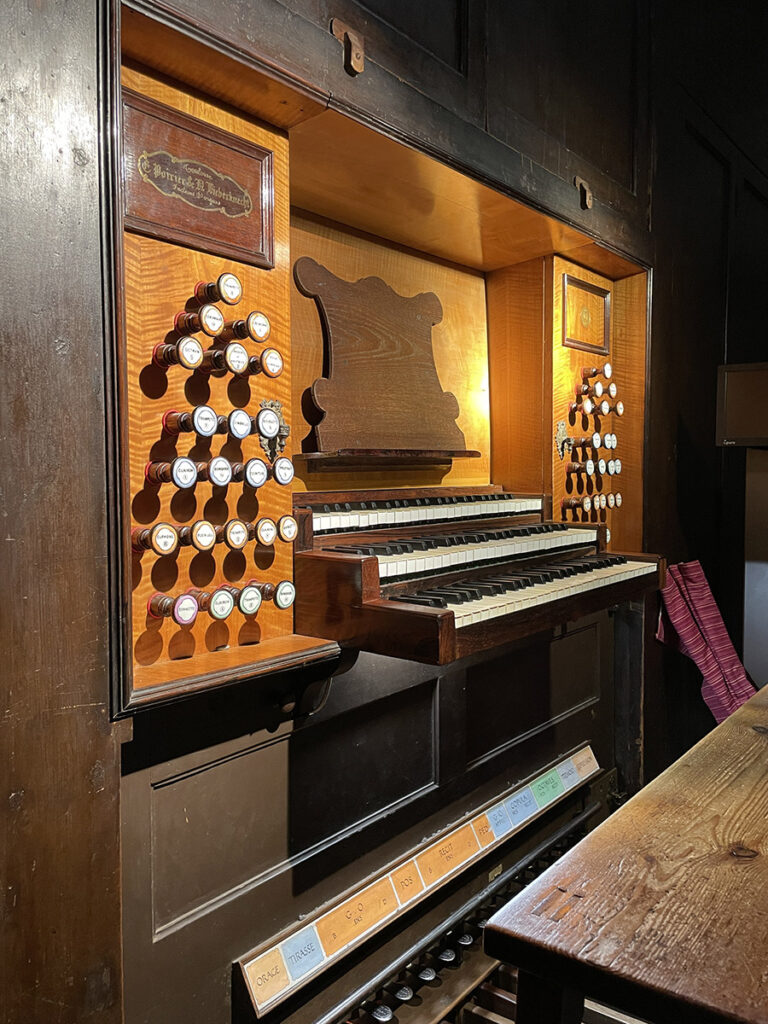
The organ comprises 2,630 pipes, 42 stops, three manuals of 54 keys each, and a 25-note pedal division. It is ideally suited both to the French repertoire of the eighteenth century and to Romantic and contemporary music.
The instrument is protected as a Historic Monument.
From 2020 to 2021, the organ underwent a complete overhaul carried out by Jean Daldosso and his team.
Founded in 1980, the Friends of the Daurade Organs Association, while overseeing the restoration of the Choir Organ, also promoted awareness of the Great Organ through numerous concerts organized in collaboration with the city’s and region’s musical institutions.
Jan Willem Jansen, Titular Organist
Specification
42 stops, 3 manuals and pedal.
Manual I:
Positif de dos
54 keys (C1-F5)
Montre 8
Bourdon 8
Salicional 8
Prestant 4
Salicional 4
Doublette 2
Plein-Jeu V
Trompette 8
Euphone 8
Clairon 4
Manual II:
Grand Orgue
54 keys (C1-F5)
Montre 16
Bourdon 16
Flûte 8 [Montre]
Bourdon 8
Flûte harmonique 8
Salicional 8
Prestant 4
Doublette 2
Fourniture IV
Cimbale III
Cornet V
Bombarde 16
Trompette 8
Clairon 4
Manual III:
Récit expressif
54 keys (C1-F5)
Flûte harmonique 8
Kéraulophone 8
Gambe 8
Voix céleste 8
Flûte octaviante 4
Octavin 2
Cornet V
Cor anglais 16
Trompette 8
Basson-Hautbois 8
Voix humaine 8
Cromorne 4
Trémolo
Pedal
30 keys (C1-F3)
25 notes on the windchest
Contre Basse 16
Basse 8
Octave 4
Bombarde 16
Trompette 8
Clairon 4
Couplers and Accessories
Grand Orgue to Pedal (30 notes)
Positif to Grand Orgue, Unison and Sub Octave
Récit to Grand Orgue, Unison and Sub Octave
Reed stop combinations: Pedal, Grand Orgue (Bass/Treble), Positif, Récit (Bass/Treble)
Grand Orgue Barker machine pedal
Three-position spoon swell pedal for the Récit (mounted on the right-foot side)
Récit Tremulant
Thunder pedal
Technical Information
Key action: Mechanical, with Barker lever assistance on the Grand Orgue
Stop action: Mechanical
Temperament: Equal temperament
Pitch: 435 Hz at 18°C
A noter :
- The Euphone and English Horn are free-reed stops.
- The 8′ rank of the Grand Orgue Cornet is open.
- A new pedal action was installed during the works carried out by Jean Daldosso in 2021.